
A plain mirror reflects whatever light happens to be in the room, which in most bathrooms means a single overhead fixture that was never aimed at a face. LED bathroom mirrors flip that setup by building the light source into the mirror itself, so the glass produces even, shadow-free illumination instead of just bouncing back whatever the ceiling provides. That shift sounds minor until you notice how much of a difference it makes at the sink every morning, especially in a bathroom with only one small window or no natural light at all.
Why the Light Source Matters
Overhead lighting was never designed with a face at close range in mind, and the mismatch shows up in a few consistent ways:
Where a plain mirror falls short
- Shadows under the brow and jaw that make grooming tasks harder than they should be
- Skin tone and makeup that read differently once you step outside
- A mirror that fogs over completely after a hot shower
- Glare bouncing off the glass at certain angles instead of lighting the room evenly
None of these get fixed by a brighter bulb overhead. They get fixed by moving the light closer to the glass, which is the entire premise behind this category of mirror rather than something layered on as a feature afterward.
Backlit or Front-Lit
Not every lighted mirror produces light the same way, and the difference changes both the look and the brightness pattern:
How the two designs differ
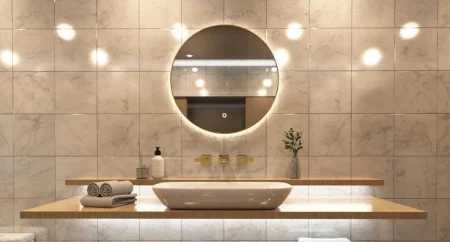
- Backlit mirrors place LEDs behind the glass, casting a soft halo around the edge rather than a direct beam
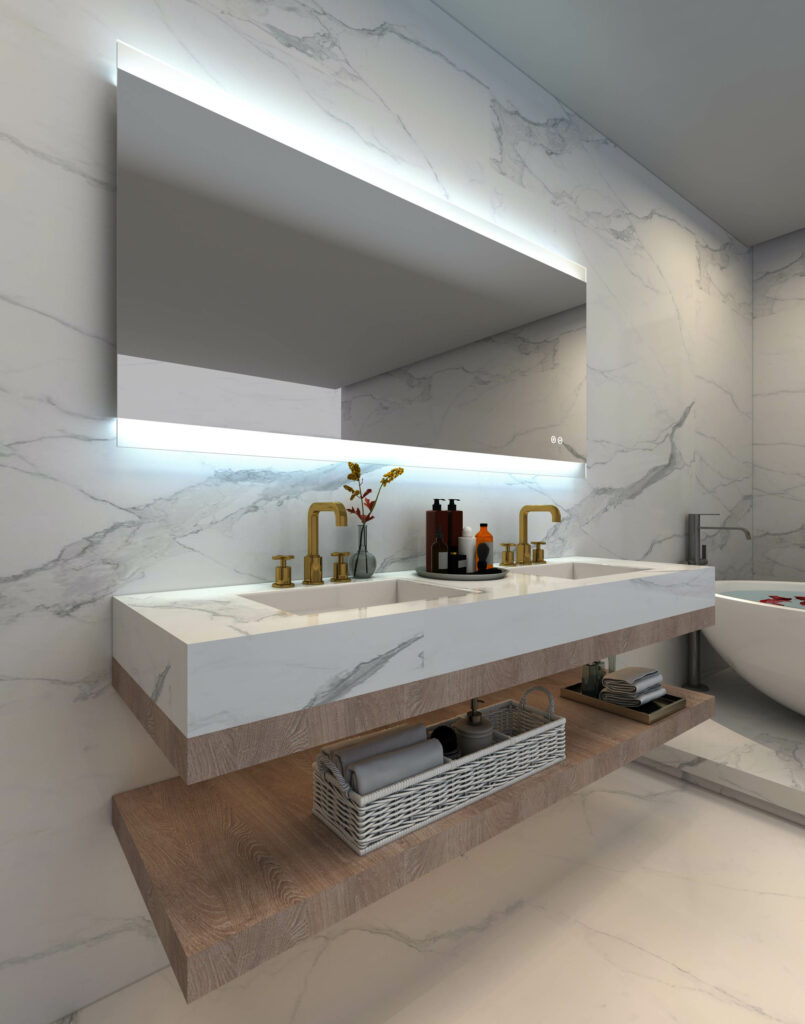
- Front-lit mirrors run LED strips along the front face or perimeter, aiming light outward toward the user
- Some designs combine both, using backlighting for ambiance and front lighting for actual task visibility
- Diffusion matters as much as placement, since raw LED strips without a diffuser tend to create visible hot spots along the edge
Front-lit designs generally do more for grooming and makeup application, while backlit designs lean toward ambient bathroom lighting rather than task lighting.
What the Electronics Add
Once a mirror has its own power source, a few other features tend to come along with it:
Common features on current models
- Dimmable controls on most models, useful for a middle-of-the-night trip that does not call for full brightness
- Touch-sensor switches instead of a physical toggle, which matters with wet hands
- Adjustable color temperature, often somewhere in the 3000K to 6000K range, shifting from warm to daylight-neutral
- Anti-fog elements built into the glass, clearing condensation faster than a towel wipe
- ETL or UL certification confirming the electronics are rated for a damp bathroom environment
That certification is worth checking specifically, since not every mirror sold as “LED” has actually been tested for bathroom-grade electrical safety, and the difference usually only becomes obvious once something starts to fail.
Mounting and Wiring
The install method decides how much work this upgrade actually takes, and it is worth confirming before ordering rather than after:
Questions to settle first
- Hardwired models tie into an existing junction box, which usually means the old mirror or light fixture already has wiring in place
- Plug-in models route a cord to a nearby outlet, which is simpler but leaves a visible cord unless it is routed carefully
- Wall bracket spacing needs to match existing studs or anchors, especially for a larger mirror
- Shape and size should be measured against the vanity width, not just the wall space, so the mirror does not overwhelm or undersize the sink area
A mirror that looks right in a showroom photo can still be the wrong proportion for a specific vanity, which is why measuring twice matters more here than with most other fixtures, and why a wider vanity often calls for a mirror sized closer to the sink centerline than to the full counter width.
LED bathroom mirrors solve a lighting problem that most people never think to name until they have one installed, and the difference in day-to-day use is bigger than the price difference from a plain mirror suggests. Retailers such as Allsumhome publish sizing and wiring guidance by mirror shape, which makes it easier to confirm the right fit before anything goes on the wall.