
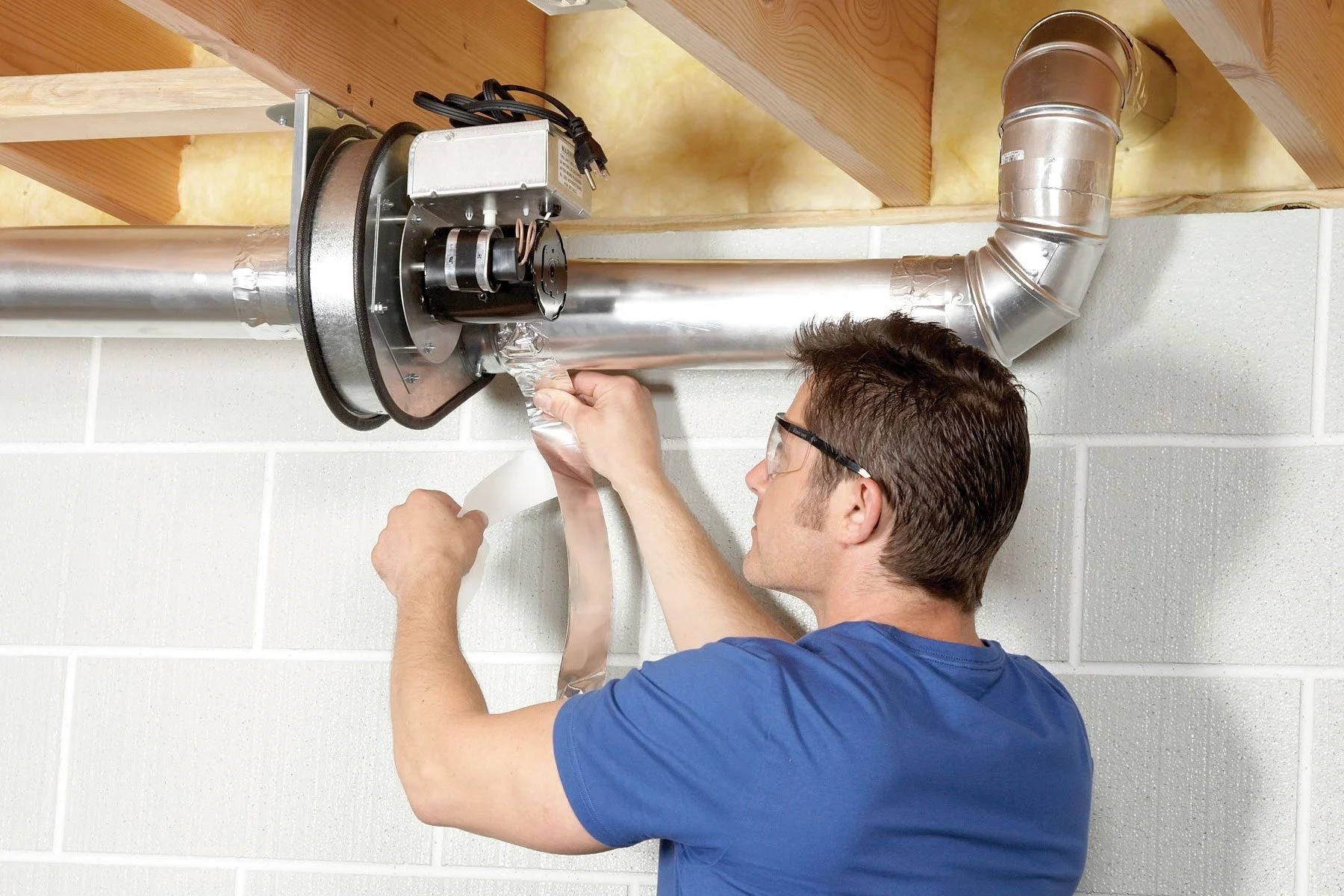
Dryer exhaust planning becomes more difficult when a laundry room is located far from an exterior wall. Long ducts and repeated changes in direction increase resistance, which can reduce the dryer’s ability to discharge heat, moisture, and lint. In qualifying installations, a purpose-built dryer vent fan can provide added airflow support. Contractors must first confirm that the product, duct layout, appliance instructions, and local code requirements permit its use.
Why Does the Exhaust Route Matter?
A clothes dryer relies on unrestricted airflow to carry moist exhaust outdoors. A short, straight duct usually offers less resistance than a long route containing several elbows. Each fitting makes it more difficult for air to travel through the system.
Laundry equipment is not always installed near an exterior wall. Interior laundry closets, basements, condominiums, and remodeled floor plans can require long exhaust routes. The duct may need to pass through a ceiling, utility chase, or several framing cavities before reaching an approved termination point.
If the route creates too much resistance, homeowners may notice longer drying cycles, excess heat around the appliance, or weak airflow at the exterior outlet.
What Should Be Checked Before Adding a Fan?
Slow drying does not always indicate that airflow assistance is required. A complete inspection should be performed before recommending an additional fan.
Start by checking:
- The dryer lint screen
- The transition connection behind the appliance
- The full accessible exhaust duct
- Duct joints and supports
- The outdoor termination
- The termination flap or backdraft damper
- Signs of crushed, separated, or damaged ductwork
- Visible lint or moisture accumulation
A crushed transition duct or blocked exterior hood can severely reduce airflow. Installing a fan without correcting the restriction could leave the underlying problem in place.
The dryer itself may also need service. Heating-element problems, sensor faults, overloaded cycles, and poor washer spin performance can increase drying time without being related to the exhaust design.
How Is Effective Duct Length Evaluated?
Contractors should compare the proposed exhaust path with the dryer manufacturer’s instructions and locally adopted mechanical requirements. The actual straight-line distance is only part of the calculation.
Elbows create added resistance and may be assigned an equivalent length. A short duct containing several tight turns can therefore behave like a much longer straight duct.
Important factors include:
- Total straight duct length
- Number of 45-degree and 90-degree fittings
- Duct diameter
- Interior surface of the duct
- Exterior termination design
- Transition duct condition
- Accessibility for cleaning
The permitted length and fitting allowances can vary by appliance and jurisdiction. The installation should follow the most applicable requirements rather than a general rule of thumb.
What Type of Fan Should Be Used?
Only a fan designed and approved for dryer exhaust service should be considered. Ordinary ventilation or inline duct fans may not be suitable for the temperature, moisture, and lint found in dryer exhaust.
A dryer exhaust fan should be selected as part of the complete system. Contractors need to check its approved duct size, operating method, electrical requirements, placement rules, and service-access needs.
The control method is especially important. A properly configured unit should operate in response to dryer use according to its manufacturer’s instructions. Installers should test startup and shutdown behavior before completing the project.
Where Should the Fan Be Installed?
Placement affects both performance and maintenance. The fan must be oriented in the correct airflow direction and installed at a location permitted by its instructions.
It should remain accessible for:
- Inspection
- Lint removal
- Electrical service
- Performance testing
- Repair or replacement
Installing the unit behind permanent wall or ceiling finishes may prevent future maintenance. When concealment is unavoidable, an appropriately sized access panel may be necessary, subject to product and code requirements.
Ductwork near the fan should be properly supported. Connections must remain secure without placing unnecessary stress on the housing.
Which Installation Mistakes Should Be Avoided?
A poorly planned installation may fail to correct the airflow complaint or create additional service concerns. Common mistakes include:
- Using a fan not approved for dryer exhaust
- Ignoring the dryer manufacturer’s duct limits
- Leaving an existing lint blockage in place
- Installing the fan in an inaccessible location
- Using excessive flexible duct
- Driving fasteners into the airflow path where lint can collect
- Failing to account for elbow resistance
- Discharging exhaust into an attic, crawl space, garage, or interior area
- Skipping post-installation testing
Dryer exhaust must terminate outdoors at an approved location. Screens or restrictive covers at the termination can collect lint and impede airflow, so the outlet design should follow applicable requirements.
How Should the System Be Tested?
Once installation is complete, operate the dryer through a normal cycle. Confirm that the fan starts and stops as designed and that air reaches the exterior termination.
Inspect the connections for movement or leakage. Listen for unusual vibration and confirm that the termination flap opens freely. When suitable instruments are available, contractors can document airflow or pressure readings for future comparison.
Homeowners should be told that the fan does not remove the need for cleaning. The lint screen should be cleaned after each load, while the duct, fan, and termination require periodic inspection based on system use and observed buildup.
Treat the Vent as a Complete System
Reliable dryer exhaust depends on the appliance, duct, fittings, fan, and outdoor termination working together. Careful planning can reduce service problems and give homeowners clear maintenance expectations.
Contractors, builders, inspectors, and homeowners can visit Suncourts to review dryer exhaust products and choose equipment suited to the duct route, installation conditions, and project requirements.