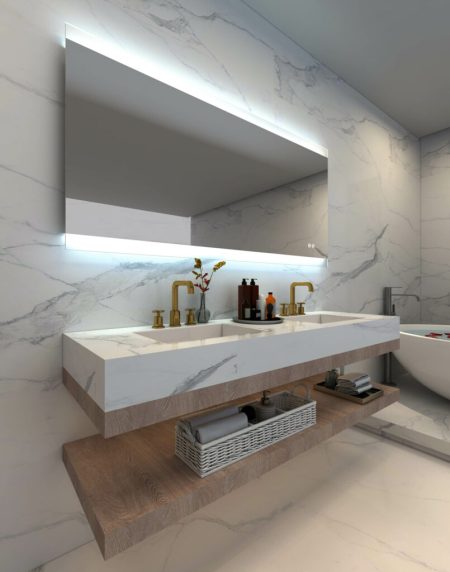

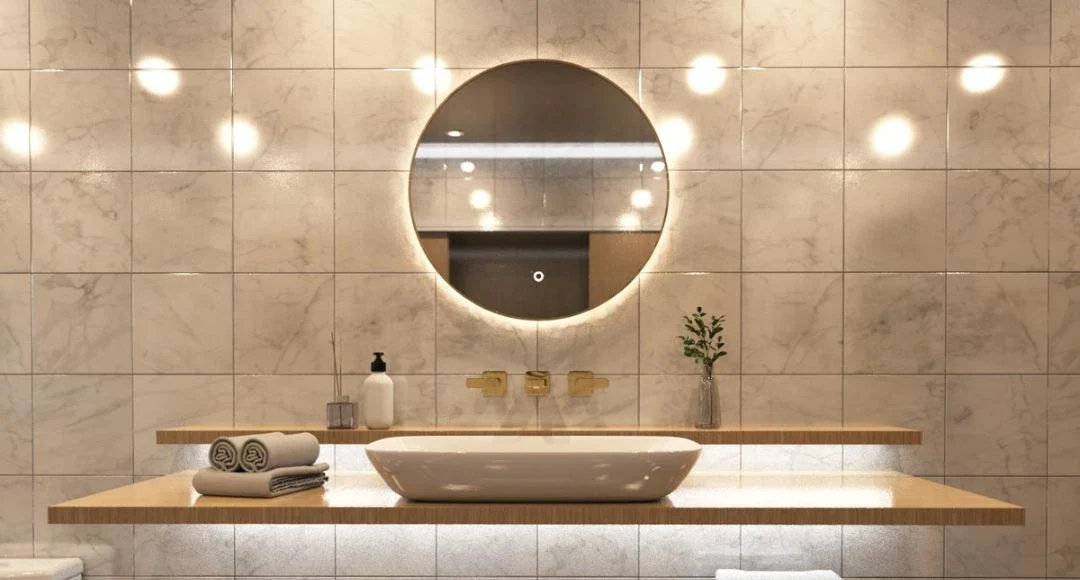
A plain mirror with a light bar bolted above it used to be the default in nearly every bathroom. That’s changing fast, as more homeowners choose LED bathroom mirrors instead — fixtures where the light is built directly into the mirror itself, rather than mounted separately above it. The shift isn’t just cosmetic. It changes how the light actually falls on your face, which matters more than most people realize until they’ve used one.
Understanding what separates a well-built LED mirror from a gimmicky one takes a bit more than checking the price tag, though.
Why the Light Source Position Actually Matters
Traditional vanity lighting sits above the mirror and points down, which lights the top of the head far more than the face. That creates shadows under the eyes and chin — exactly the areas you’re trying to see clearly when shaving, applying makeup, or checking your skin.
LED mirrors solve this by moving the light source to the edge or backlight of the mirror itself, which surrounds the face with more even illumination instead of throwing it from a single point overhead. The difference is immediately noticeable to anyone who’s used both types side by side.
Key Features Worth Comparing
Not all LED mirrors are built the same way, and a few specifications separate the fixtures that hold up from the ones that dim, flicker, or fog within a year or two:
- CRI rating — look for CRI 90+ , which indicates the light renders colors and skin tones accurately rather than washing them out or casting an unnatural tint
- Color temperature range — the better mirrors offer an adjustable range, typically 3000K to 6000K, letting you shift from warm evening light to a cooler, more clinical tone for close grooming tasks
- Dimming control — touch-sensor dimming is now standard on most mid-range and premium models, replacing the flip switches or pull cords of older fixtures
- Anti-fog function — a built-in defogger, usually a thin heating element behind the glass, keeps the mirror clear after a hot shower without wiping
- Frame style — options now range from frameless edge-lit designs to backlit mirrors with a visible perimeter glow, and the choice affects both price and how the fixture reads visually in the room
Mirror Shapes and Sizing Considerations
LED technology has also expanded the shape options available, which wasn’t really the case with older fluorescent vanity lighting:
- Rectangular mirrors remain the most common and the easiest to size against a standard vanity width
- Round and oval mirrors have become popular for smaller powder rooms, where a softer shape reduces visual bulk
- Full backlit mirrors illuminate the entire perimeter rather than just the edge, giving the most dramatic lighting effect but usually at a higher price point
- Sizing generally follows the vanity — a mirror roughly 2 to 4 inches narrower than the vanity on each side tends to look proportional, though this varies by bathroom layout
Smart Features Worth Knowing About
Some higher-end LED mirrors have added functionality beyond lighting, and it’s worth knowing what’s available even if you don’t need all of it:
- Built-in Bluetooth speakers for music or calls while getting ready
- Digital clock or temperature displays integrated into the glass
- Motion-sensor activation, which turns the light on automatically when someone approaches
- Memory dimming, which returns to a preferred brightness setting after being turned off and on
None of these are necessary for a mirror to function well, but they’re worth considering if the bathroom is being fully renovated rather than just having a single fixture swapped.
Installation Basics
Most LED mirrors are designed to mount similarly to a standard mirror, with a few additional considerations:
- A nearby electrical junction box or outlet is required, since these mirrors need a power source unlike a plain glass mirror
- Wall-mounted junction boxes should be confirmed before ordering if the mirror will be hardwired rather than plugged in
- Weight matters more with larger backlit models, so confirming the wall can support the mirror’s mounting hardware is worth checking before installation
- Most manufacturers provide clear installation instructions, and larger or hardwired models may be worth having a licensed electrician handle
The Takeaway
An LED bathroom mirror solves a lighting problem that traditional vanity fixtures never fully addressed, while also opening up more options in shape, size, and added functionality than older mirror styles offered. Retailers specializing in bathroom fixtures, including Allsumhome, carry a range of LED mirror styles across different sizes and feature sets, which makes it easier to match the fixture to the bathroom rather than settling for a generic rectangle.