

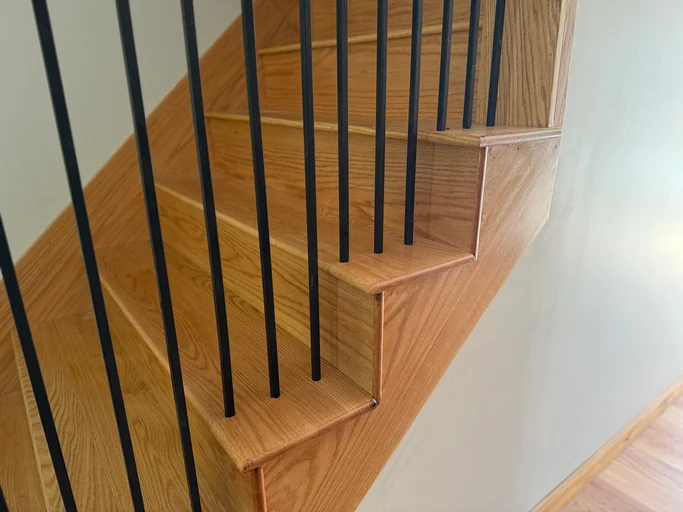
Selecting hardwood stairs involves more than choosing a wood species that looks good in a sample. Contractors, flooring professionals, builders, and designers also need to consider construction type, tread dimensions, finish requirements, exposed edges, and coordination with nearby flooring. For residential projects where warmth, familiar grain character, and solid hardwood construction are priorities, red oak stair treads remain a practical option for both new staircases and remodeling work.
Start With the Existing Stair Structure
Before choosing a tread, determine how the staircase is being built or renovated.
In new construction, the project may call for full-thickness hardwood treads installed as the primary finished walking surface. A remodeling project, however, may involve an existing staircase that will remain in place while a hardwood surface is installed over it.
That distinction affects tread thickness, nosing, installation method, and finished stair dimensions.
Contractors should inspect the staircase before ordering materials. Existing framing, old treads, carpet removal, surrounding trim, and finished floor heights can all influence which stair components will work properly.
Early evaluation is especially important on older homes, where tread depth and width may vary slightly from one step to another.
Traditional vs. Retrofit Treads
Traditional and retrofit treads serve different project requirements.
Traditional red oak treads are commonly used for new construction and more extensive staircase replacements. Wood Stair Co lists traditional red oak options at 1 inch thick by 11-1/2 inches deep, with multiple lengths available.
Retrofit treads are designed for remodeling situations where an existing stair structure is being covered rather than removed. These thinner components allow contractors to introduce a hardwood surface without rebuilding the entire staircase.
The decision should be based on site conditions rather than appearance alone. Contractors also need to verify that adding material over an existing tread will maintain suitable stair geometry from the first step through the landing.
Decide Between Prefinished and Unfinished Red Oak
Finish selection can have a major effect on the installation process.
Unfinished red oak gives installers greater control over final color. The tread can be sanded, stained, and coated at the property, making this approach useful when the staircase needs to closely coordinate with hardwood flooring or existing millwork.
Solid unfinished red oak treads are also available in stain-grade material for contractors who need to create a project-specific finish.
Prefinished products take a different approach. The finish is applied before the tread reaches the jobsite, reducing the sanding, staining, and curing work required after installation. This can be helpful in occupied homes where limiting dust, odors, and downtime is important.
Prefinished red oak options are available in multiple stock stain colors, giving project teams a range of choices without requiring the entire finishing process to take place on site.
Neither approach is right for every project. The choice should depend on installation conditions, flooring coordination, scheduling, and the degree of color control required.
Coordinate the Staircase With Nearby Flooring
Stairs often create a visual connection between two finished levels of a home. For that reason, tread selection should be considered alongside the flooring rather than after the main flooring order has already been completed.
Red oak is known for its visible grain and warm natural character. When used next to red oak flooring, it can help create continuity between the horizontal floors and the staircase.
Projects using another wood species can still incorporate red oak, but designers should consider whether the intention is to match or create deliberate contrast.
Review stain samples under actual project lighting whenever possible. Natural daylight, interior lighting, paint colors, cabinetry, and nearby materials can all change how a wood finish appears.
Sheen should also be considered. A staircase with a noticeably different finish level from the surrounding hardwood can look disconnected even when the stain colors are close.
Account for Exposed Sides
Stair configuration affects more than the tread dimensions.
A staircase enclosed between walls generally uses a closed or box tread. If one side of the staircase is exposed, the tread may require a finished return.
Manufacturers commonly offer left-return and right-return versions for these applications. Red oak return treads provide a finished hardwood edge where the side of the step remains visible.
The return direction is determined by viewing the staircase from the bottom, so contractors should confirm orientation carefully before placing an order.
This is a small specification detail, but getting it wrong can result in delays, reordering, and avoidable material costs.
Measure Before Ordering
Accurate field measurements are essential for stair work.
Before ordering, verify:
- Tread width
- Tread depth
- Required thickness
- Number of steps
- Tread lengths
- Exposed left or right sides
- Landing dimensions
- Riser dimensions
- Nosing requirements
- Adjacent flooring height
It is also useful to plan related stair components at the same time. Risers, landings, handrails, moldings, and trim can affect the final appearance and should not be treated as unrelated purchases.
For flooring retailers, this creates an opportunity to discuss the staircase while helping customers select hardwood flooring. Contractors and builders can similarly reduce late-stage decisions by including stair materials in the original project scope.
Red oak offers contractors and design professionals a familiar hardwood appearance, multiple finishing possibilities, and options suited to both replacement and new-construction staircases. Careful planning around tread type, finish, dimensions, returns, and surrounding flooring can help prevent installation problems and create a more cohesive finished staircase. Visit Wood Stair Co to review red oak tread options and related stair components for your next residential project.